Chakra
Chakra Petals: Meaning & Number of Petals per Chakra
Dr S Pujah · 25 June 2026
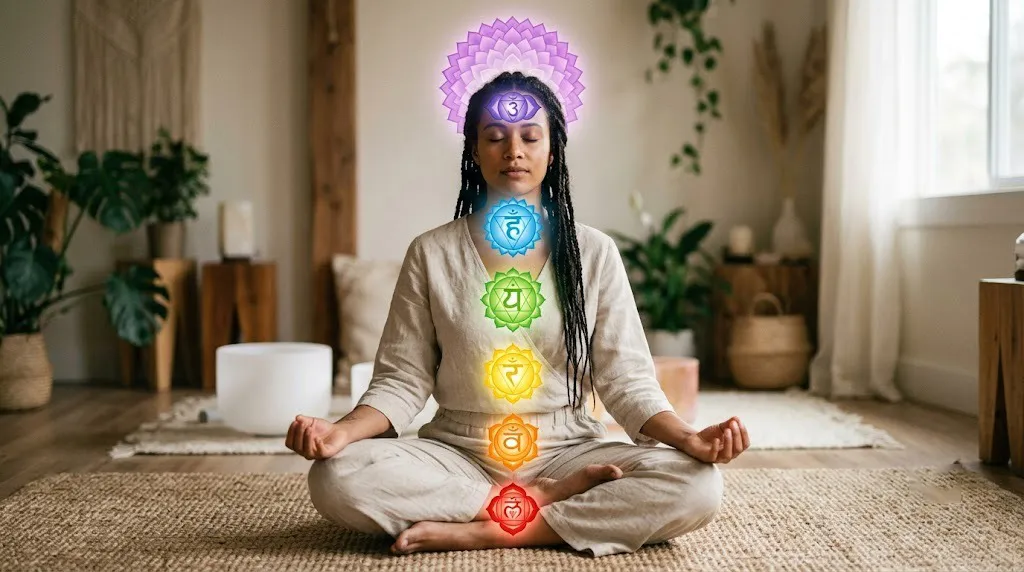
In yogic tradition, each chakra is pictured as a lotus flower — and the number of petals isn't random. Each petal represents a subtle quality, sound or vibration. Understanding them turns "chakra work" from vague to structured.
How many petals does each chakra have?
- Root (Muladhara): 4 petals
- Sacral (Svadhisthana): 6 petals
- Solar Plexus (Manipura): 10 petals
- Heart (Anahata): 12 petals
- Throat (Vishuddha): 16 petals
- Third Eye (Ajna): 2 petals
- Crown (Sahasrara): 1,000 petals (the "thousand-petalled lotus")
What the petals mean
Traditionally each petal is associated with a Sanskrit sound and a facet of experience — for the lower chakras, things like instinct, desire and will; for the higher ones, expression, insight and connection. The rising petal count mirrors a movement from grounded, physical themes toward subtler, expansive ones.
Using petals in practice
Knowing the petal structure gives your practice a map. Instead of a general "open your heart", you can bring attention, breath and sound to a specific centre and its qualities — making meditation feel focused rather than abstract.
A gentle note
Chakra work is a contemplative, educational practice for balance and self-awareness — supportive for wellbeing, not a medical treatment. Everyone experiences it differently.
Frequently asked questions
Which chakra has the most petals? The crown chakra — the "thousand-petalled lotus".
Why do chakras have different petal counts? Each petal maps to a subtle quality/sound; more petals reflect subtler, higher centres.
How do I start working with chakra petals? Begin with one centre, its petal count and theme — a workshop offers a structured way in.