Aromatherapy
Calming and Cleansing: Using Lavender, Lemon and Eucalyptus at Home
Dr S Pujah · 28 September 2026
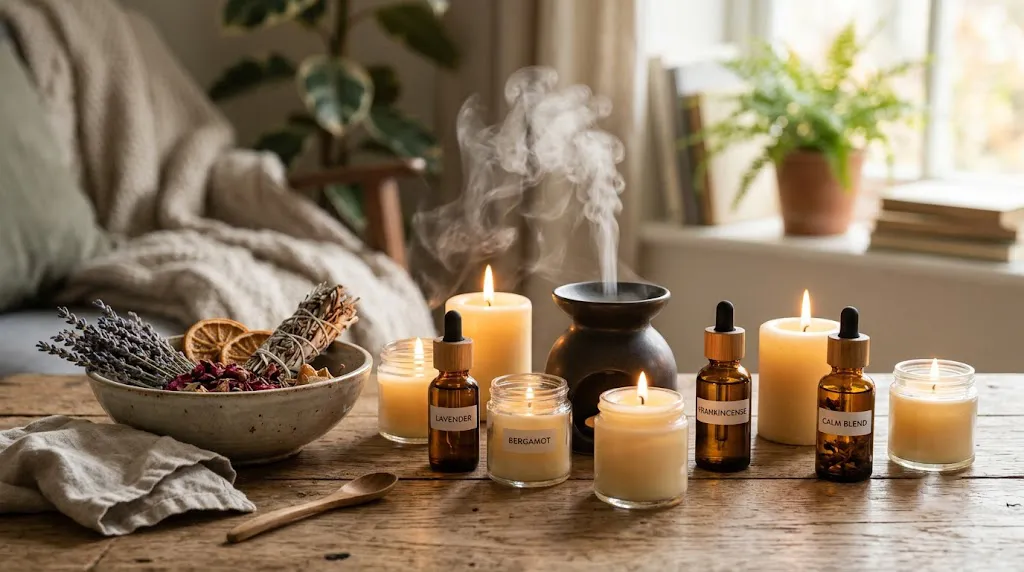
Lavender, lemon and eucalyptus are three of the most versatile essential oils for the home. Lavender suits calm evenings and bedtime routines, lemon brings a bright, fresh scent to mornings and homemade cleaning sprays, and eucalyptus gives rooms and bathrooms a crisp, clean feel. Use them in a diffuser, a diluted blend or a cleaning spray — always diluted, and never taken internally.
Scent is one of the fastest ways to change the feel of a room. In traditional scent practice and in Ayurvedic home care, fragrance is used to mark transitions: the start of the working day, the end of it, the moment a space is cleaned and reset. These three oils cover most of those moments between them.
Before you start: using essential oils safely
- Always dilute before putting any oil on skin. A common guide is 2–3 drops of essential oil in a teaspoon (5 ml) of a carrier oil such as sweet almond, jojoba or coconut.
- Do a patch test first. Apply a little diluted oil to the inner arm and wait 24 hours.
- Cold-pressed lemon oil can make skin more sensitive to sunlight. Do not apply it to skin that will be in the sun within 12 hours — an important point in the UAE and GCC.
- Keep eucalyptus away from babies and young children, and do not use it near their faces.
- Never swallow essential oils, and keep bottles out of reach of children and pets.
- Diffuse in a ventilated room, in short sessions of 30–60 minutes rather than all day.
If you are pregnant, or have any concerns about using oils, check with a qualified professional before you start.
Lavender: for calm evenings
Lavender (Lavandula angustifolia) is the best-known essential oil in the world. Its soft, floral scent is widely associated with rest and winding down, which makes it a natural choice for the last hour of the day.
- Diffuse 4–6 drops in the bedroom for 30 minutes before you go to bed, then switch the diffuser off.
- Add one drop to a cotton pad and tuck it inside your pillowcase.
- Mix 5–8 drops into a tablespoon of carrier oil or unscented bath salts, then add to a warm bath for an evening soak.
- Blend 2–3 drops in a teaspoon of carrier oil for a slow foot massage before bed.
Lavender pairs well with a consistent evening routine: dim lights, screens away, the same bedtime each night. The scent becomes a cue that the day is ending.
Lemon: for fresh mornings and a clean home
Lemon oil (Citrus limon) is pressed from the peel of the fruit. Its bright, sharp scent is associated with freshness and energy, which makes it a good match for mornings and for cleaning.
For mornings:
- Diffuse 4–6 drops in the kitchen or living room while you prepare for the day.
- Combine lemon with a drop of peppermint in the diffuser in your workspace for a crisp start.
For cleaning:
- All-purpose spray: in a glass spray bottle, mix 250 ml of water, 250 ml of white vinegar and 10–15 drops of lemon oil. Shake before each use. Test on a hidden area first, and do not use vinegar on marble or natural stone.
- Chopping boards: after washing, wipe with a cloth dampened with water and a drop of lemon oil for a fresh finish.
- Laundry: add a few drops to a wool dryer ball or the fabric-softener compartment for a clean scent.
In Vastu, a clean, fresh-smelling kitchen and entrance are considered essential for a balanced home. Lemon is a simple way to make cleaning feel like a ritual rather than a chore.
Eucalyptus: for a crisp, clear space
Eucalyptus oil has a strong, fresh, camphor-like scent. It is especially popular in bathrooms and in homes where air conditioning runs most of the year and rooms can start to feel stale.
- Shower bundle: put 2–3 drops on a washcloth and place it on the shower floor, away from the water stream, so the steam lifts the scent.
- Diffuse 3–5 drops in a living room or study for a clean, open feel.
- Add a few drops to your mop water for a fresh finish on tiled floors.
- Place a few drops on a cotton ball inside a wardrobe or shoe cupboard.
Eucalyptus is strong, so a little goes a long way. Start with fewer drops than you think you need.
Storing your oils well
Essential oils keep best in dark glass bottles with the cap closed tightly, away from heat and direct sunlight. In a Gulf summer, that means never leaving them in a car or on a sunny windowsill. Citrus oils such as lemon lose their freshness fastest, so buy smaller bottles and use them within about a year of opening. Label any blends you make with the date and the drops you used, so you can repeat the ones you enjoy.
Simple blends to try
These combinations work well in a diffuser (use 5–6 drops in total):
- Evening calm: 3 drops lavender, 2 drops cedarwood or sandalwood.
- Bright morning: 3 drops lemon, 2 drops rosemary.
- Fresh home: 2 drops eucalyptus, 2 drops lemon, 1 drop lavender.
Scent, space and routine
The value of these oils comes as much from routine as from the oils themselves. When the same scent marks the same moment each day — lemon while making breakfast, eucalyptus after cleaning, lavender before bed — your home starts to signal the rhythm of the day for you. That is the heart of the Aromatherapy Chakra Petal approach: scent used deliberately, in the right space, at the right time.
Questions people ask
What are the best calming essential oils for the home?
Lavender is the most popular calming oil for evenings. Many people also enjoy cedarwood, sandalwood and chamomile. Lemon and eucalyptus are better suited to fresh, energising moments such as mornings and cleaning.
Can I put essential oils directly on my skin?
No. Always dilute essential oils in a carrier oil first — around 2–3 drops per teaspoon — and do a patch test. Avoid applying lemon oil to skin that will be exposed to the sun.
Is it safe to diffuse essential oils around children and pets?
Use extra care. Keep eucalyptus away from babies and young children, diffuse in short sessions in ventilated rooms, and make sure pets can leave the room. When in doubt, ask a qualified professional first.
Your next step
If you want a complete guide to matching scents to each area of your life and home, the Aromatherapy Chakra Petal Guide walks you through it step by step.